
"The future of warfare lies in the streets, sewers, high-rise buildings, industrial parks, and the sprawl of houses, shacks, and shelters that form the broken cities of our world. We will fight elsewhere, but not so often, rarely as reluctantly, and never so brutally. Our recent military history is punctuated with city names – Tuzla, Mogadishu, Los Angeles, Beirut, Panama City, Hue, Saigon, Santo Domingo – but these encounters have been but a prologue, with the real drama still to come." -- Major Ralph Peters, US Army
The New Ecology of WarMore: Here
The camera is shaking. The focus is poorly adjusted. Some seconds pass before you can tell what the film depicts.
Then the focus is sharpened. At once, the scenario becomes uncomfortably clear: the man half-lying on the ground; the group of policemen surrounding him with truncheons in their hands. Then the beating begins. The kicks. The assault goes on for a minute and a half.
It is three minutes past midnight on the 3 March 1991. When the film stops, Rodney King is lying motionless on the ground.
Slightly more than a year later, on 29 April 1992, the four policemen who assaulted King are cleared of all charges by a unanimous jury. That same day, Los Angeles erupts in violent riots, the most brutal in US history. Riots lasting six days. Entire blocks are burned down, more than 50 people are killed and thousands are injured. Not until the National Guard seizes the streets of Los Angeles does the violence come to an end.
Two years earlier, in 1990, the then fairly unknown historian and urban theorist Mike Davis published his analysis of the history and future of Los Angeles, City of Quartz. His excavation of social and ethnic tensions in Los Angeles suddenly seemed prophetic. In a stroke, Davis was transformed into an internationally established and esteemed social critic, his books and articles gaining readers far beyond the academic world.
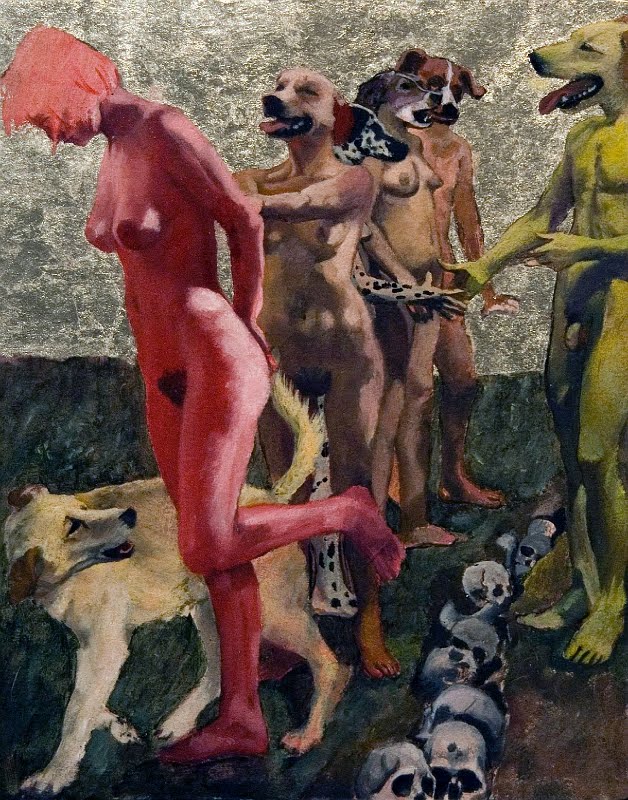
ARTWORK by Martin Beck

No comments:
Post a Comment