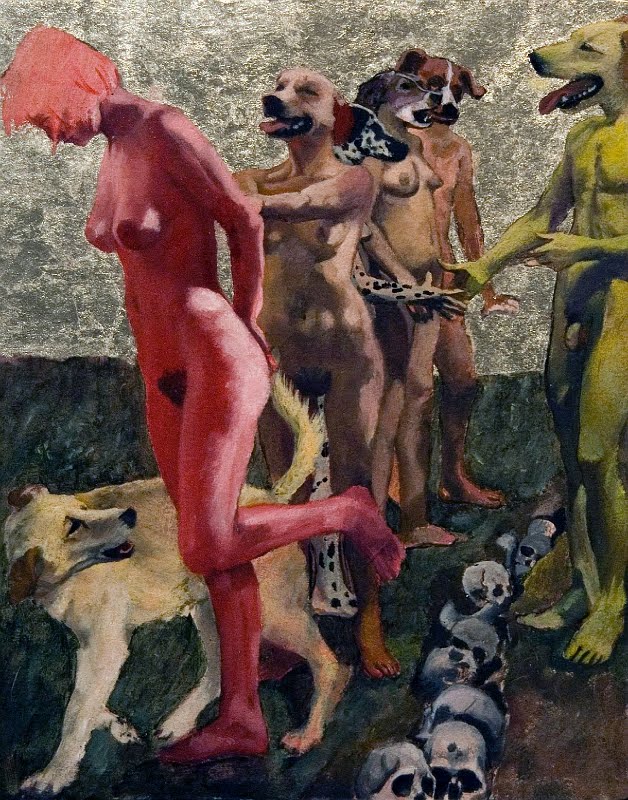
 Can we identify how cultures evolve — and if so, can we change our collective course for the good of the planet?
by Barbara J. King
In 2005 Paul Ehrlich, along with Donald Kennedy, editor-in-chief of Science, proposed that the nations of the world launch a Millennium Assessment of Human Behavior, a project intended to emphasize that changing our behavior, our "individual motives and values," is as pivotal for long-term sustainability as tallying carbon levels and degrees of temperature rise. Ehrlich and Kennedy noted a striking disconnect between the scientific recommendations most of us can dutifully recite — arrest population growth, curb greenhouse-gas emissions, limit consumption — and the measures that we are willing to adopt in our day-to-day lives (and that our politicians are willing to endorse, perhaps especially in an election year). How, they asked, might human cultures evolve to permit the kinds of behavioral changes that bootstrap a sustainable and equitable global society?
A long view of cultural evolution reveals that an edgy coexistence between people and place has shaped our species right from the start. Early humans, since the time of the great "lineage split" from our ape-like ancestors about 6 million years ago, lived off the land. In small groups they gath- ered plants, nuts, and tubers, and later hunted game. People continuously altered their environments — all animals do, from beavers to bonobos — but the pace picked up greatly at the advent of agriculture. From 10,000 years ago on, coexistence shifted toward control. More species, indeed more of the world, came under the human power to reshape, and increasingly, to harm.
In The Dominant Animal, Paul and Anne Ehrlich trace this evolutionary trajectory and consider the problems that today beleaguer us, "a small-group animal striving to live in a gigantic global civilization."
Read More: Here
Read More: Here

No comments:
Post a Comment